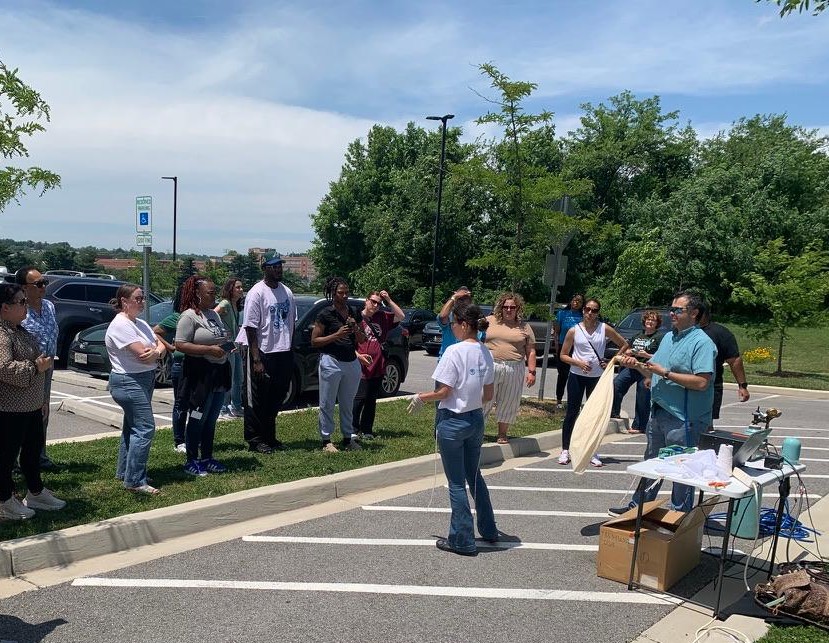
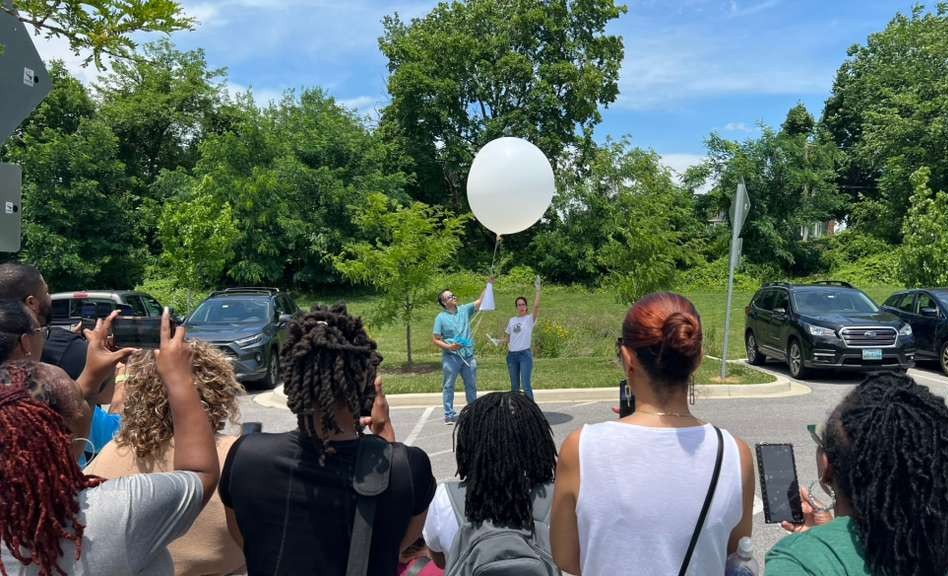
On Thursday, June 18, 2026, Howard University researchers took their laboratory equipment and scientific knowledge to Montebello School in Baltimore. The goal of the visit was to engage with elementary and middle school teachers and to foster meaningful discussions about atmospheric science, as well as to explore the physics of weather and atmospheric dynamics through live demonstrations. These demonstrations were designed to be easily replicated in the classroom and to help plant the seeds of curiosity and a love of science in younger students.
The visit marked a special departure from tradition. Each year, teachers from Baltimore City Public Schools typically visit the Howard University Beltsville Campus (HUBC) Atmospheric Station to learn about the research activities and observational techniques used to study the atmosphere. This year, however, the outreach effort was brought directly to the educators, allowing our team to meet teachers in their own learning environment.
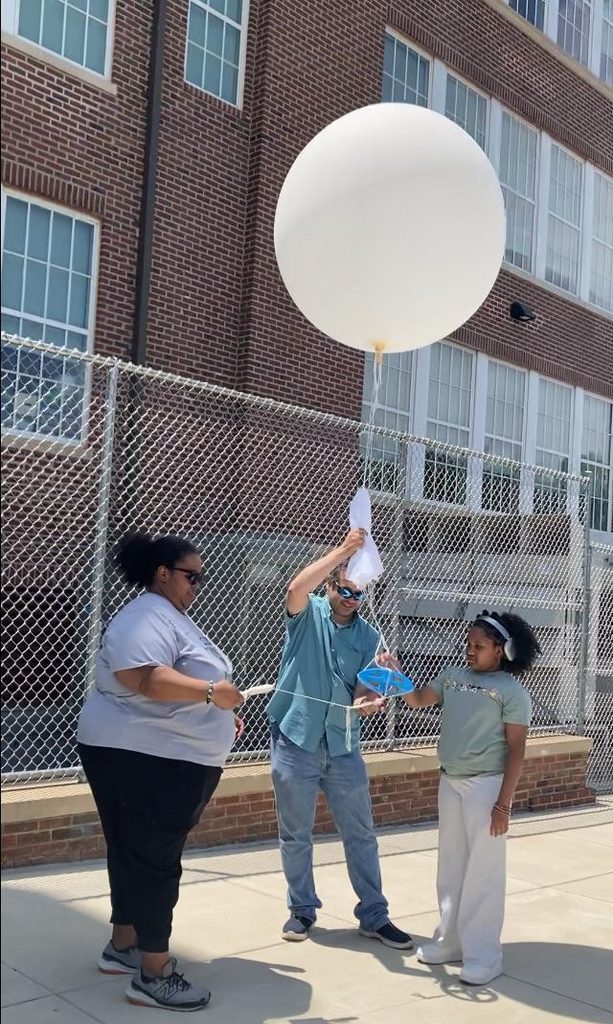
Pictured above, Adrian Flores, a research scientist at HUBC, assists multiple groups of teachers with the release of a weather balloon-borne radiosonde. He explained the importance of weather balloons in providing accurate atmospheric data that help improve weather prediction models as well as the dynamics of the mesmerizing transit and trajectory that a balloon experiences from its release at the surface until it reaches the stratosphere, explodes, and lands. Throughout the day, participants discussed fundamental concepts such as atmospheric pressure, density, temperature, humidity, cloud formation, and severe weather.
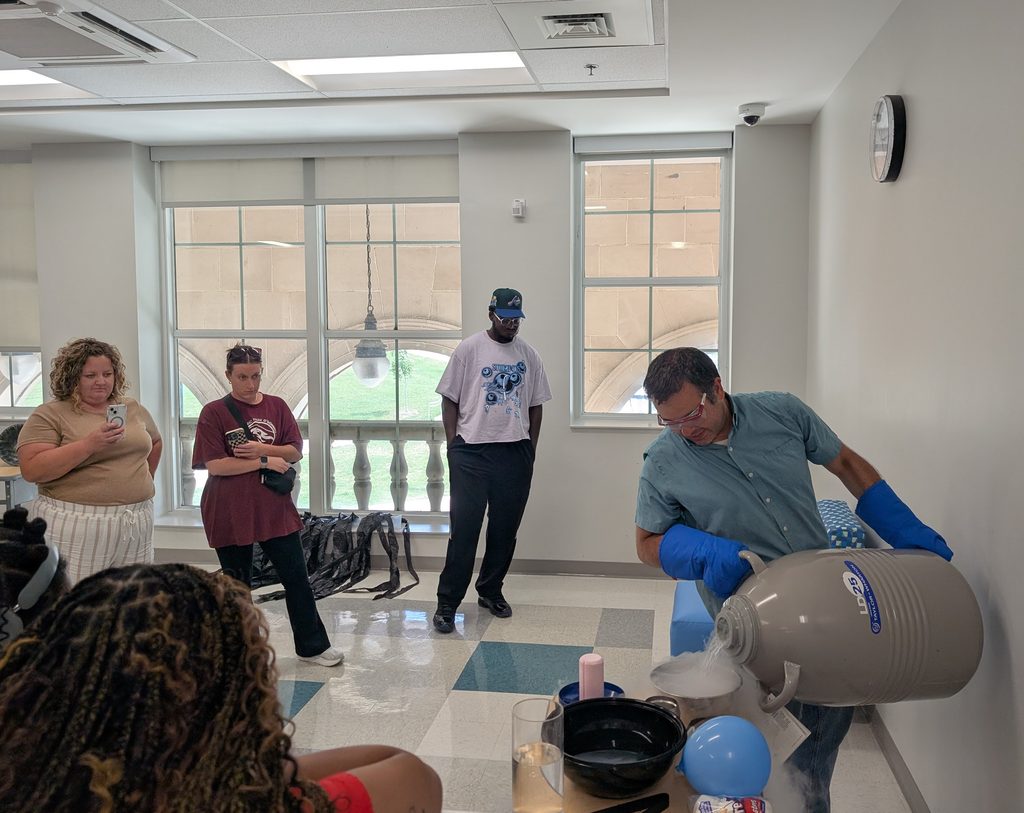
Outdoor activities were followed by indoor demonstrations. Adrian led a discussion on cloud formation using liquid nitrogen, one of the most engaging activities of the day. Teachers learned about the unique properties of liquid nitrogen, including its extremely low temperature and its ability to rapidly cool the surrounding air. As water vapor condensed into visible clouds, participants were able to observe atmospheric processes in real time, which combined scientific concepts with a sense of wonder and awe.
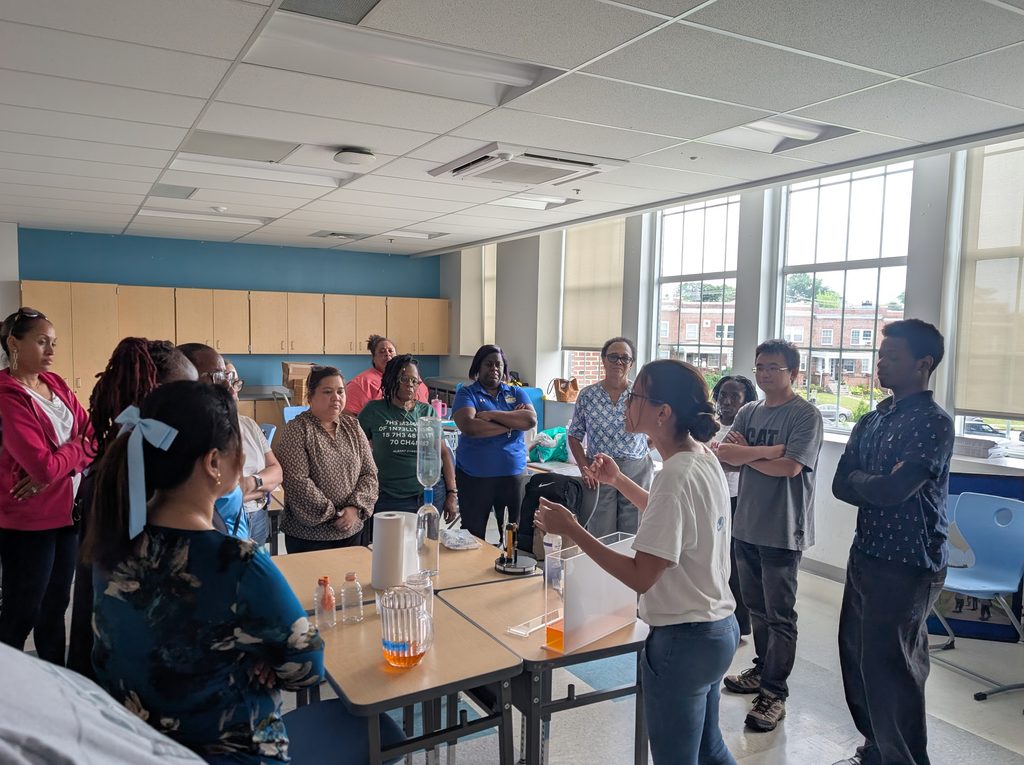
Ocean circulation was also discussed as it is imperative to understand that the ocean and the atmosphere are in contact and in a constant state of energy exchange. Pictured above, Rocio Rossi, both physicist and data technician, working at HUBC uses salt and a bit of food coloring to explain how differences in water density are responsible for much of the engine driving the Atlantic Meridional Oceanic Current, (AMOC) around the world and how rapidly increasing global temperatures are slowing down and restructuring weather phenomena worldwide. Through a simple but captivating experiment, participants observed how invisible differences in temperature and salinity can set entire oceans in motion.
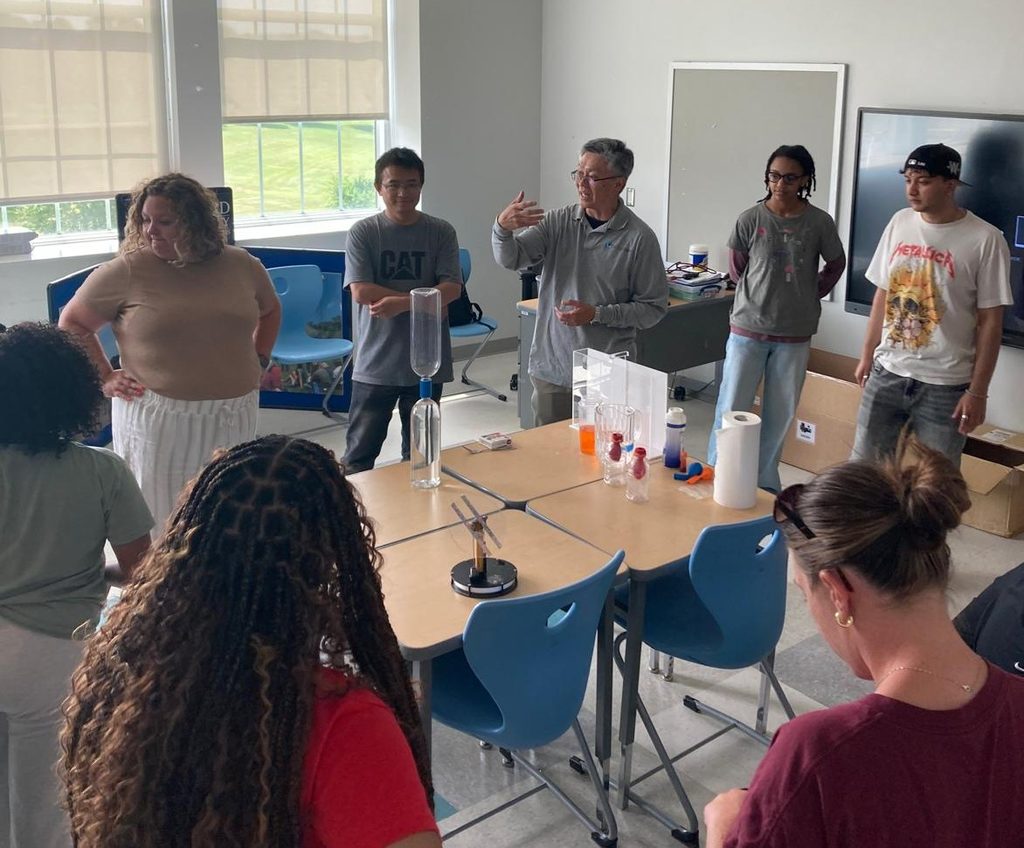
Dr. Ricardo Sakai, Senior Research Scientist at HUBC, rotated among the various activities throughout the day, contributing his invaluable expertise in micrometeorology and enriching discussions across all stations. He was joined by HUBC researchers Dr. Nakul Karle and Dr. Zhifeng Yang, as well as rising environmental and atmospheric scientists, currently students at Howard University, Chancellor Anderson, Ezekiel Charles, and Aryan Bagale. Nakul led an engaging demonstration showing how lasers can be used to transmit sound through space, illustrating fascinating principles of light and communication. Zhifeng guided participants through the workings of a Stirling engine, demonstrating how temperature differences can be converted into mechanical motion. Together, the team showcased a wide range of scientific disciplines, highlighting the diverse research activities taking place at HUBC.
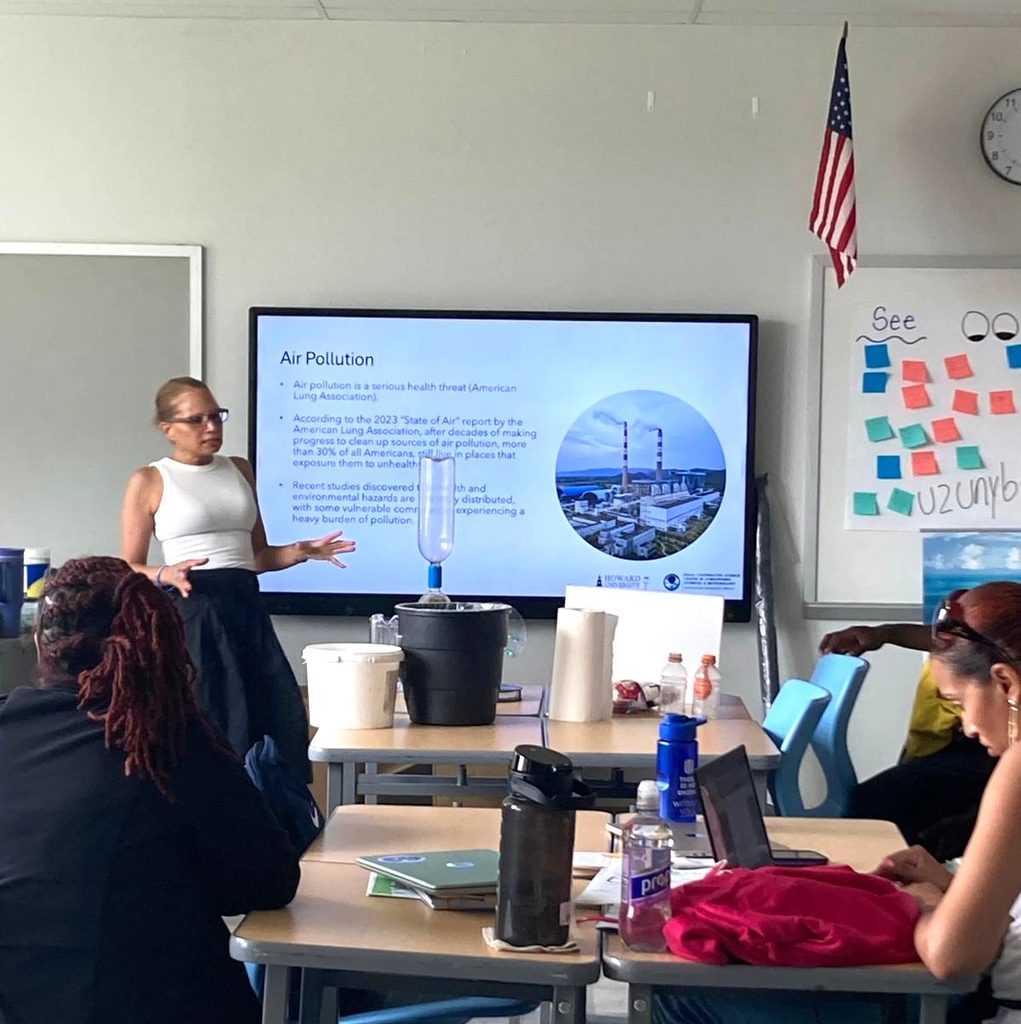
Last, and most important, we had the privilege of being joined by Dr. Terri Adams-Fuller, Interim Associate Dean for Research in the College of Arts and Sciences at Howard University. Dr. Adams led an important discussion on air pollution, focusing on particulate matter (PM2.5), pollen, dust, and asbestos. Drawing on her extensive work in risk communication and environmental impacts on communities, she highlighted how environmental hazards often disproportionately affect vulnerable populations. What followed was a dynamic and engaging conversation on practical measures that families can take at home to reduce exposure to these threats and improve indoor air quality. The discussion served as a powerful reminder that environmental science is not only about understanding the world around us, but also about protecting the health and well-being of our communities.
The entire HUBC team would like to especially thank Donald Long, Secondary Teacher at Baltimore City Public Schools and atmospheric scientist, for inviting our team and for making this event a success worthy of being repeated next year.
Leave a Reply