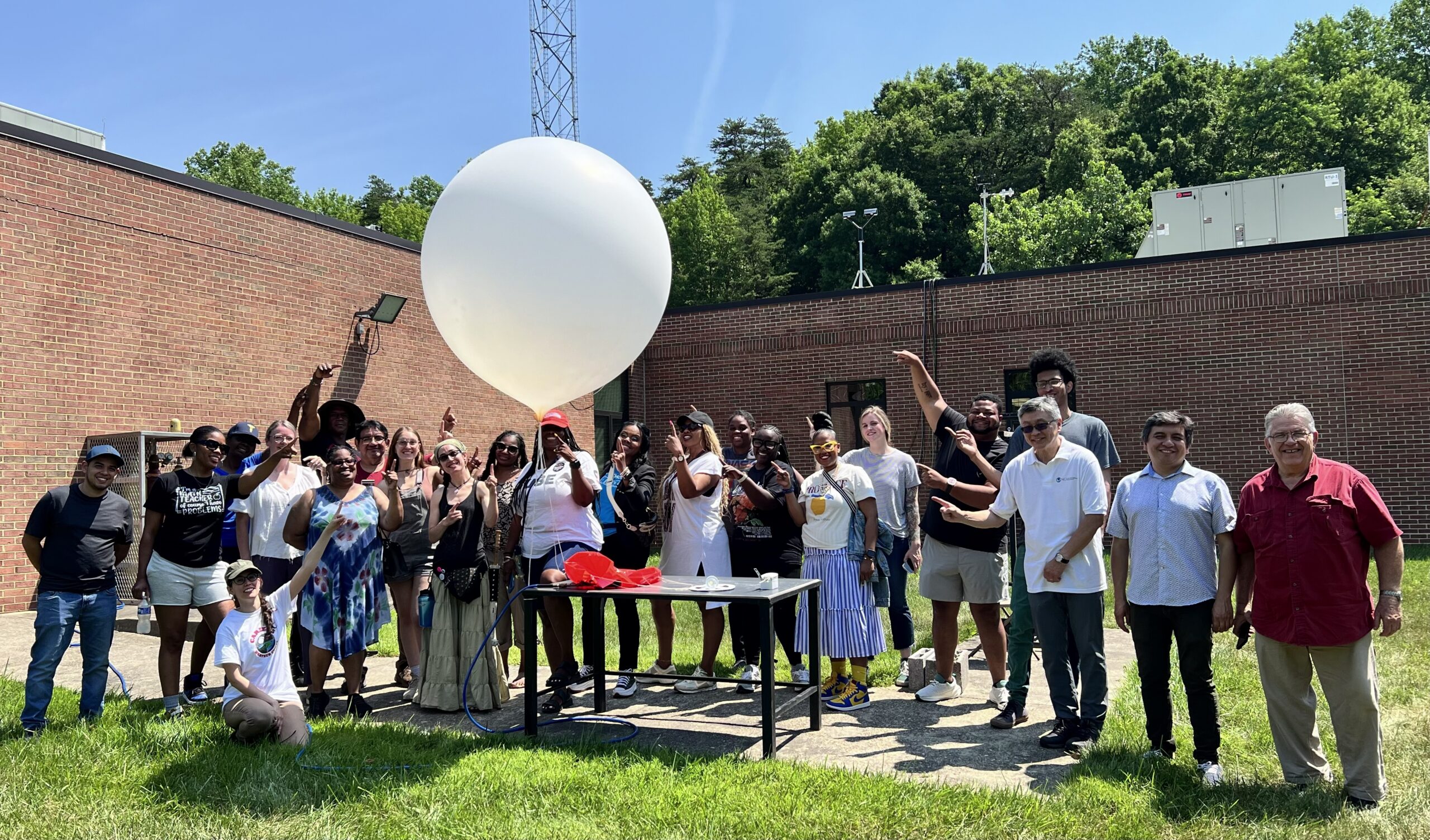
October marked the end of a meaningful chapter in my life: The culmination of three wonderful years at the Howard University Beltsville Campus (HUBC) Atmospheric Research Station.
I feel deeply grateful for the opportunity to have been part of a place and a team of extremely knowledgeable individuals who always jump at the opportunity to share their expertise with humility and good candor. This experience has been especially meaningful because it was my first professional position since graduating from Johns Hopkins University with my Master’s in Climate Science.
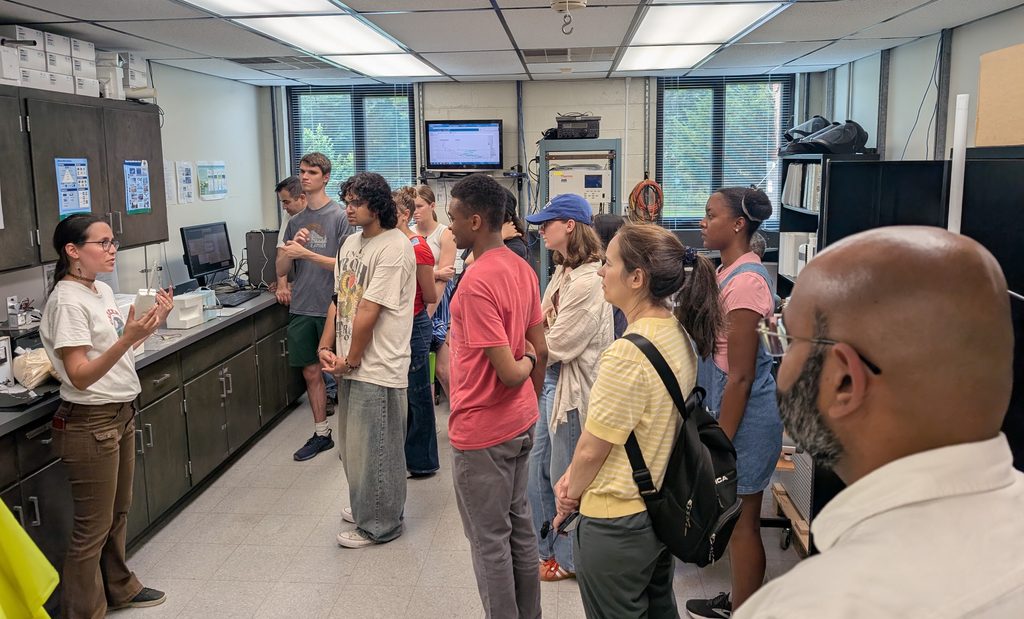
I had the privilege of working with a plethora of atmospheric instruments, analyzed their data, participated in many field campaigns throughout the years, traveled and contributed to several educational opportunities across many schools in the DMV area, talked about science to hundreds of students, attended conferences, participated in several atmospheric publications across different journals and most notably, had the opportunity to publish my very own paper in the journal Remote Sensing (MDPI). Throughout my three years at HUBC, I have gained a deeper appreciation for the work that goes into monitoring our atmosphere. More importantly, I have learned that science is not only about data and instruments, but also about teamwork, and the endless hours of dedication that make discovery possible.
I am especially thankful to the colleagues and mentors who welcomed me and made this experience such an important part of my professional journey.
I would like to specially thank Dr. Nakul Karle for being an exceptional mentor, for inviting me to contribute to his research, and for guiding me with love and patience through the process of my first co-authored scientific publication. His mentorship has been an invaluable part of my professional growth, and I will always be grateful for the opportunity I had to learn from him.
I would also like to thank Dr. Ricardo Sakai for presenting me with this opportunity and all the great things that came with it, for sharing his wisdom in micrometeorology in every conversation, and for gently pushing me to do thing when I refused to do them, such as learning how to code, which in hindsight I must admit it is an indispensable scientific tool.
Finally, and most importantly, my deepest thanks to Adrian Flores. Most of the things that I learned in my time at HUBC, I learned from him. He went above and beyond by sharing with me the wealth of knowledge he had acquired over more than twenty years of launching weather balloons. Beyond his professional guidance, his extraordinary character made him into that pillar I knew I could always turn to if I did not know how to perform a task, was too weak to move a hydrogen tank (my job, not his) or just had a silly question with an obvious answer, I still felt I could always reach out to him and he would help without an ounce of judgement even if he had no time. These kinds of people are what keep a team like ours together and running strong.
Leaving HUBC is bittersweet, but I see this moment as the beginning of everything that comes next. Every career has its starting point, and I will always remember this station and the radiosonde lab as the place where I took my first steps into the professional world of atmospheric science.